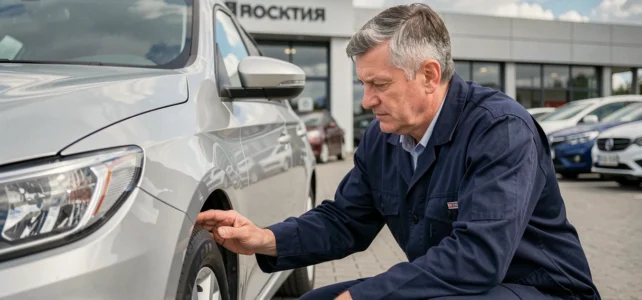
A well-equipped Volkswagen Golf is listed on a Polish website for significantly less than its French equivalent. Before booking a ticket to Warsaw or Wroclaw, it’s worth running the numbers. Buying a car in Poland can still be a cost-effective option for many French buyers, provided they account for the true cost beyond the advertised price.
Environmental penalty and registration costs in France: the calculation most people overlook
Most comparisons stop at the purchase price. You compare the Polish price with the French price, see the difference and conclude that it’s a good deal. The problem is that the French environmental penalty also applies to imported used vehicles.
In practice, a car bought in Poland will be subject to the penalty when it is first registered in France, even if it has already been on the road for several years. The amount depends on the vehicle’s specifications and age. For a fairly powerful petrol model or a recent diesel SUV, the bill can significantly reduce the savings made on the purchase.
Before committing to a listing, add up the vehicle price, any potential penalty, the cost of transport or the round trip, and the registration fees. That’s the total to compare with the price of an equivalent model in France. If you take the time to buy a car in Poland after calculating every cost, it’s often still a good deal, especially in segments where the price difference is greatest.
Poland’s car market: which used vehicles are worth considering
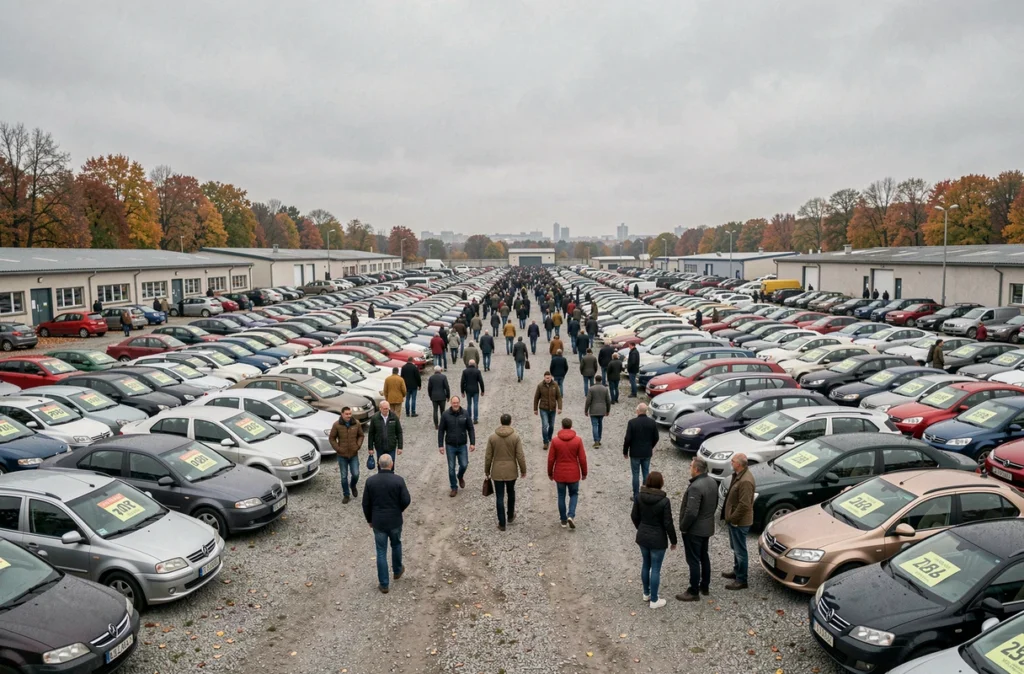
The Polish market isn’t limited to tired little city cars. There’s a large selection of well-equipped vehicles, often in higher trim levels than those sold in France for the same model.
The most common makes
Opel, Skoda, Volkswagen and Renault are among the most common makes in Poland’s used-car market. They’re widely available because they suit the local market, which means plenty of choice and competitive prices compared with France.
Rare configurations at reasonable prices
Some models that are uncommon in France are easy to find in Poland, sometimes with options or engines that aren’t available in the French catalogue. If you’re looking for a specific version (an estate, a manual gearbox on a model usually sold with an automatic, or a high-end trim on a mid-range vehicle), the Polish market offers real possibilities.
Historia Pojazdu and vehicle history checks: what the free tool shows—and what it doesn’t
Poland provides a free public tool, Historia Pojazdu, which lets you check the national register using the registration number, VIN and date of first registration. You can access it online and download a report containing the data recorded in the Polish system.
On paper, it’s a good starting point. You can check the number of Polish owners, past roadworthiness tests and any reported issues. In practice, the tool has one specific limitation: the vehicle’s foreign history is only partially shown.
A car imported into Poland from Germany, Belgium or the United States may have a previous history that doesn’t appear in the Polish register. Foreign data is only available for certain countries and certain types of information. The Historia Pojazdu report is informative, but it isn’t an official certificate.
Three steps to take before signing:
- Cross-check the VIN using a paid service that covers multiple countries (Germany, Belgium, the United States, depending on the vehicle’s presumed origin)
- Ask the seller for all maintenance and roadworthiness records, including those from the country of origin if the vehicle was imported into Poland
- Have an independent expert inspect the vehicle in person, especially for models above a certain price point, as repaired accident-damaged vehicles remain a documented risk in this market
Tax clearance certificate and French registration: steps that can cause delays if left too late
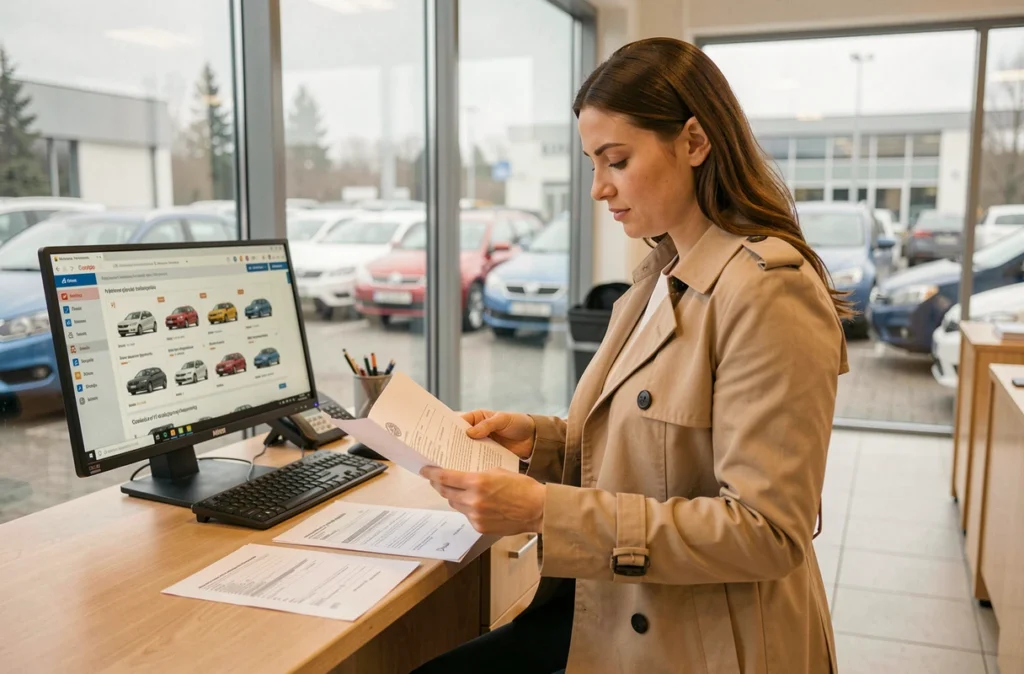
Once you’ve bought the vehicle and brought it back to France, registration involves a mandatory step: obtaining a tax clearance certificate. This document confirms that the vehicle’s VAT status complies with French tax regulations.
For a vehicle bought in another European Union country, the tax clearance certificate is required before you can apply for registration. You apply through the tax office, and the process can vary depending on your département. Some departments process applications within a few days, while others take longer.
VAT: used vehicles bought from private sellers
Poland does not charge VAT on used vehicles sold to private buyers abroad as part of an export. This is a genuine tax advantage compared with buying from a dealer, where VAT applies under the usual rules.
However, if you buy from a Polish dealer, check whether the sale is subject to the VAT margin scheme or intra-Community VAT, as this affects how it is treated for tax purposes in France.
Documents to gather for the ANTS
- The original Polish registration certificate (Dowód rejestracyjny)
- The tax clearance certificate issued by the French tax office
- A French roadworthiness test certificate issued within the last six months (or a Polish roadworthiness test report accompanied by a translation)
- Proof of purchase (invoice or sales contract)
- The European Certificate of Conformity (COC) or a vehicle identification certificate issued by the DREAL if the COC is unavailable
Gathering these documents before returning to France speeds up the process. An incomplete application will hold up registration, and an unregistered vehicle cannot be driven legally beyond the period allowed for transit plates.
Buying a used vehicle in Poland still offers clear savings on many models, provided you include the environmental penalty, tax clearance certificate and transport in your total budget. The pitfall isn’t the Polish market itself; it’s comparing an advertised price there with one here without adding the costs in between.