
Resetting the tire pressure on a Citroën C5 is not just a matter of pressing a button. The procedure depends on the type of TPMS system installed, the vehicle’s generation, and the actual condition of the tires at the time of the operation. Here we detail the technical points that determine the success of this reset.
Indirect or direct TPMS on Citroën C5: identify the system before any manipulation
The distinction between indirect TPMS and direct TPMS is the first parameter to check. An indirect system does not have physical sensors in the wheels: it uses data from the ABS sensors to detect a change in rolling diameter related to under-inflation. The reset is then performed via the onboard menu or a dedicated button inside the cabin.
A direct system, on the other hand, relies on pressure sensors integrated into the valves of each wheel. These sensors transmit real-time measurements to the control unit. For this type of installation, the reset procedure may require electronic learning via a diagnostic tool connected to the vehicle’s OBD port.
We regularly observe that drivers apply an indirect reset procedure on a vehicle equipped with a direct TPMS, which explains the failure of the reset. The maintenance booklet or the sticker on the driver’s door frame usually specifies the vehicle’s configuration.
The procedure for resetting the tire pressure on the C5 therefore varies significantly depending on the original equipment, and attempting a reset without this prior verification is akin to working blind.

Cold pressure and calibration: the trap of hot inflation
A reset performed on hot-inflated tires is doomed to fail or, more problematically, it skews the reference value recorded by the control unit. When a tire is rolling, friction raises its internal temperature and pressure increases by several tenths of a bar compared to the cold value.
If the system records this inflated pressure as the new reference, the warning light will come back on as soon as the tires cool down and the pressure drops back to its actual value. We recommend leaving the vehicle parked for at least two hours before any inflation correction, then proceeding immediately with the reset.
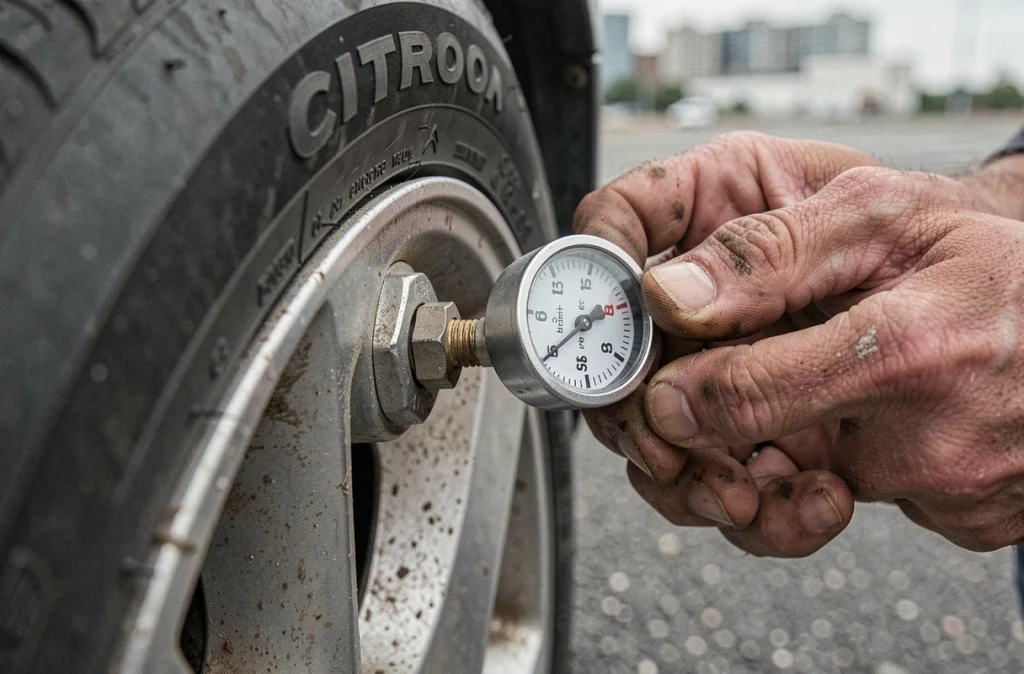
Recheck with a pressure gauge before reset
The reference values are indicated on the sticker on the driver’s door frame, differentiated according to load (empty vehicle, loaded vehicle). A service station pressure gauge may have a significant accuracy discrepancy compared to a calibrated inflator. Check the pressure with a personal calibrated gauge before initiating the reset to limit false positives.
Reset procedure on Citroën C5 with indirect TPMS
On C5 models equipped with an indirect system, the reset is done through the instrument cluster or multifunction screen. The usual sequence is as follows:
- Inflate all four tires (and the spare tire if the system accounts for it) to the prescribed pressure, with the vehicle cold
- Turn on the ignition without starting the engine, access the “Vehicle” or “Settings” menu via the dial or touchscreen, then select the tire pressure reset option
- Confirm the reset and drive a few kilometers for the system to recalculate its reference values based on the new ABS data
The warning light may remain on during the first few kilometers following the reset. This is normal: the control unit needs continuous driving to validate the consistency of the new measurements.
The reset must follow every pressure adjustment
The reset is necessary after any inflation correction, even minor. A simple addition of a few hundredths of a bar changes the rolling diameter of the tire. Without a reset, the system continues to rely on the old reference and may trigger a false under-inflation warning light.
TPMS warning light reappears after reset: diagnosing persistent causes
A warning light that comes back on within minutes or hours following a correctly executed reset does not indicate a procedural problem. It signals a real fault that the reset cannot correct.
- Slow leak on a valve, sidewall, or at the tire bead: a visual inspection with soapy water on each valve and each rim-tire junction helps locate the problem
- Faulty TPMS sensor (on direct system): the battery integrated into the sensor has a limited lifespan, and its replacement requires removing the tire
- Under-inflated spare tire: on some configurations, the system also monitors the spare tire, a point often overlooked during inflation
- Incorrect reference pressure: if the mounted tires have a different load index or size from the original, the prescribed value on the door frame no longer applies
A persistent warning light after two reset attempts justifies a visit to the garage for a complete diagnosis via the OBD port. The technician will be able to read the specific fault codes related to the TPMS module and identify the faulty sensor or circuit.
Tire changes and sensor replacements: what changes for the reset
During a seasonal tire swap or tire replacement, the reset procedure must be restarted. On a direct TPMS, replacing a tire often requires relearning the sensors so that the control unit associates each sensor ID with the correct wheel position (front left, rear right, etc.).
This step requires a diagnostic tool capable of communicating with the TPMS module. Without relearning, the system may display crossed values or trigger a sensor fault warning light instead of a simple pressure warning light.
On an indirect TPMS, changing tire size (switching from one profile to another, for example) alters the rolling diameter and requires a reset to recalibrate the reference. Every change in tire fitment calls for a complete reset, otherwise the monitoring system becomes inoperative.
Road safety directly depends on the reliability of the pressure control system. A poorly calibrated TPMS does not protect better than an absent TPMS: the rigor of the reset procedure conditions the entire monitoring chain.