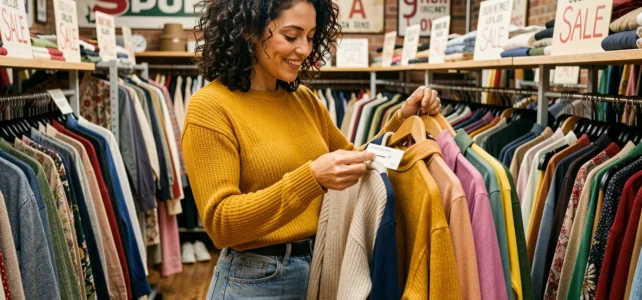
Smart shopping is a way of buying clothes that looks beyond the price tag to consider the true cost of wearing an item: fabric durability, versatility in your wardrobe and any additional expenses. This approach is the opposite of impulse buying driven by a sale or a fleeting trend. It can help you build a stylish wardrobe without blowing your budget, as long as you know where to look and what to check before you pay.
The true cost of a second-hand trend piece
The price listed on a second-hand platform is only part of the total cost. A dress that seems like a bargain may need hemming, a new zipper or professional cleaning. These expenses, often overlooked at the time of purchase, can turn an apparent bargain into an item that costs as much as buying new.
Three costs can add to the final bill without appearing on the price tag:
- Shipping and return fees, which vary widely from one platform to another and can make up a significant share of the price for items costing less than twenty euros.
- Necessary repairs (loose seams, missing buttons, stubborn stains), which often cost more than expected if you haven’t inspected the photos closely.
- Hidden fiber wear: a second-hand garment that pills after three washes is no bargain, even at half price.
To work out the true cost, simply add the purchase price, shipping fees and an estimate for any alterations, then divide the total by the number of times you’ll wear the item. Sometimes called the “cost per wear,” this calculation lets you objectively compare a second-hand item with its equivalent bought new on sale. Urban Fashion’s shopping tips apply this cost-per-wear approach to different clothing categories.

Second-hand or new on sale: which option for which item?
Second-hand shopping and sales don’t meet the same needs. According to Refashion’s 2025 barometer, second-hand now accounts for a growing share of textile consumption in France. This growth doesn’t mean that buying used is right for every item.
Items that work well second-hand
Coats, structured jackets and leather bags tend to hold up better than fine knits or synthetic pieces. For these items, second-hand often offers better value for money than buying new on sale, because prices drop sharply while the items still have plenty of life left. A well-maintained denim jacket or trench coat can be bought for a fraction of its original price without sacrificing functionality.
Items to buy new during sales
Close-fitting basics (T-shirts, underwear, tights) lose their shape after a few months of wear. Buying them second-hand means paying for a garment that’s already nearing the end of its life. It’s better to wait for sales or private sales on these items, where discounts on new products can be competitive without the risk of hidden wear.
The type of store also makes a difference. In a physical thrift store, you can feel the fabric, try the item on and check its condition. Online, not being able to try it on increases the risk of returns and extra fees. For clothes where fit is crucial (a fitted dress, high-waisted trousers), trying the item on is still the best way to avoid a bad buy.
Repair Bonus: extend the life of your wardrobe instead of buying new
Before buying a new trend piece, check whether something you already own can be repaired. It’s a smart shopping habit that’s often overlooked. The Refashion Repair Bonus gives you a discount directly at participating certified repair shops. Replacing a lining, adjusting the fit or changing a zipper can then cost far less than buying new.
This option also supports a budget-conscious approach: every repaired item frees up money for a well-chosen purchase. Instead of accumulating five average sale items, investing in alterations for two existing pieces and buying just one quality item creates a more cohesive look and a more sustainable wardrobe.
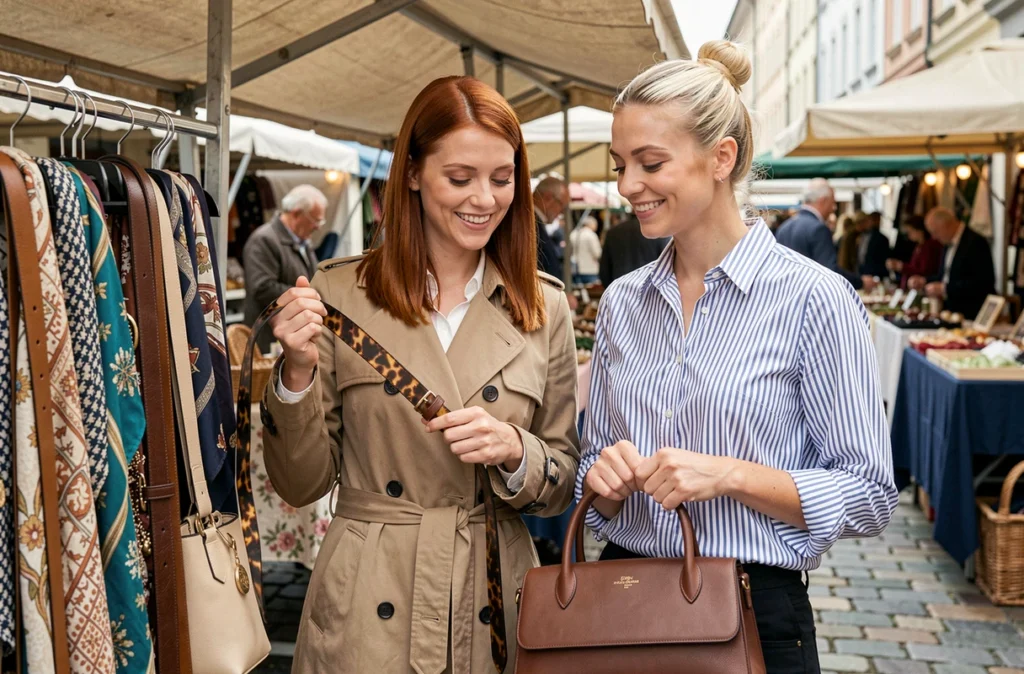
Creating a stylish look on a limited budget: practical trade-offs
Style isn’t about how many items you buy, but how well they work together. A functional wardrobe is built around a foundation of neutral basics (dark-wash jeans, a white T-shirt, a plain blazer), complemented by two or three high-impact trend pieces that change with the season.
A common pitfall is buying lots of inexpensive fashion items without checking whether they work with the rest of your wardrobe. A statement piece (a patterned dress, a colorful jacket, statement shoes) only works if it goes with at least three outfits you already own. Without that versatility, it becomes a wasted expense, whatever the price.
A few questions can help you filter your purchases:
- Does the item go with at least three tops or three bottoms you already own?
- Is it easy to care for in a way that fits your actual habits (machine-washable, no dry cleaning)?
- Will the fabric hold up to a full season of regular wear? A rough feel or excessive sheerness when you buy it can signal a short lifespan.
Using these filters before every purchase, whether at a thrift store, online or in a shop during sales, naturally reduces buying mistakes. The key to making your shopping budget go further isn’t finding the lowest price; it’s avoiding purchases you’ll only wear once or twice. A thirty-euro garment worn fifty times costs less per wear than a five-euro item worn twice and then forgotten at the back of your wardrobe.