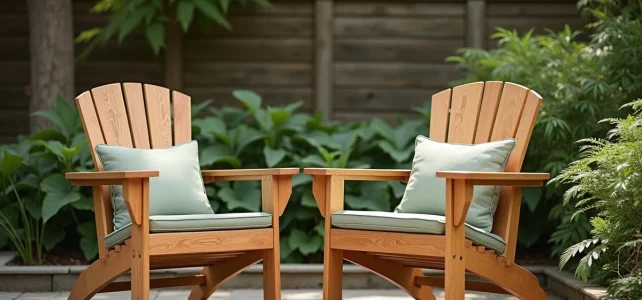
A wooden garden chair left unprotected on a south-facing terrace will turn gray in a few months, crack within a year, and lose its seating comfort in two seasons. The choice of wood, the shape of the seat, and the direct environment of the chair determine its longevity much more than the displayed price. To find your way, it’s helpful to start with concrete constraints: exposure, frequency of use, and available space for winter storage.
Exposure and location: the real starting point for choosing a wooden chair
We often start by browsing catalogs looking for a style. The useful reflex is rather to consider the place where the chair will live. A space shaded by a pergola or a mature tree limits the graying of the wood and the temperature variations that cause cracks and deformations.
On a south-facing terrace without sun protection, the wood undergoes accelerated aging from UV rays and heat. There are converging field reports from landscapers: the actual durability of a chair depends as much on its location as on the chosen wood species. An acacia placed under an awning can last longer than a teak left in full sun all year round.
As detailed in the advice from Ambiance Jardin, choosing the chair is part of a broader reflection on the layout of the terrace or garden, taking into account the available shade, exposure to driving rain, and prevailing winds.
Before comparing wood species, we note three elements of the outdoor space: the duration of direct sunlight, the presence or absence of shelter (even partial), and the frequency of heavy rain episodes. These three parameters guide both the type of wood and the level of maintenance to be expected.
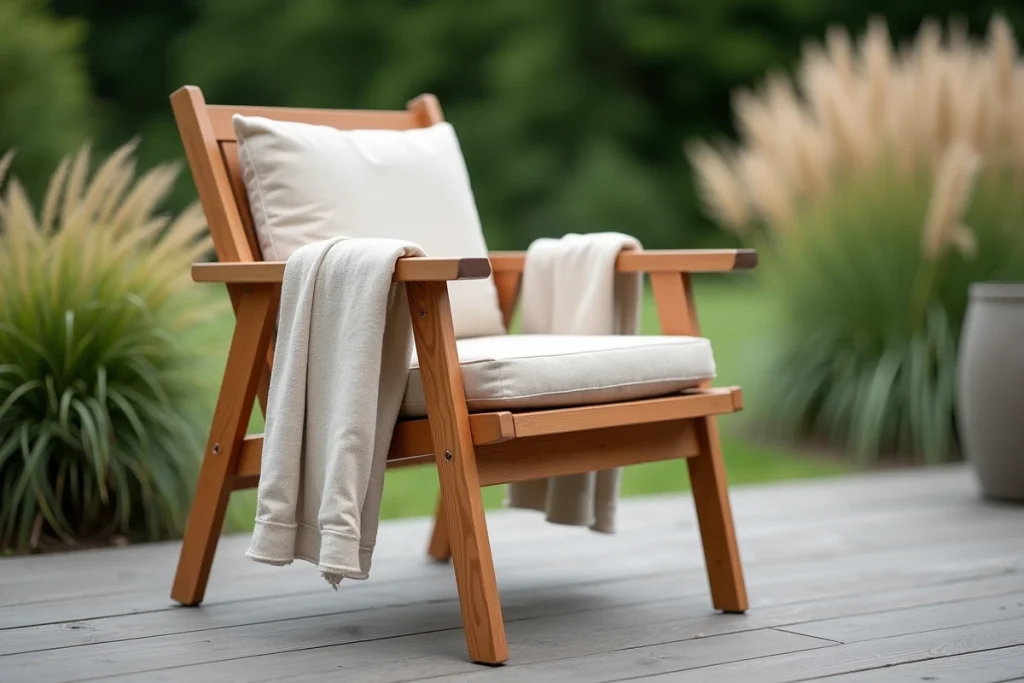
Teak, acacia, eucalyptus: which wood species for a durable chair
The choice of wood species is not just a matter of budget. Each wood reacts differently to moisture, UV rays, and fungi. Here we focus on the three most common species in garden furniture.
Teak, the reference for natural durability
Teak contains a natural oil that makes it resistant to water, insects, and mold without initial treatment. It is the most durable species for prolonged outdoor use. It grays over time, but this patina does not affect its structural strength. Maintenance is limited to an annual cleaning, possibly supplemented by a saturator if you want to maintain the original golden hue.
A certified teak chair costs significantly more than a model made of acacia or eucalyptus. We are talking about a significant gap, sometimes ranging from one to double the price. FSC or PEFC certification guarantees a source from sustainably managed forests, a point to check systematically.
Acacia, a good compromise between price and resistance
Acacia (often black locust) offers high density and good natural resistance to the elements. It is well-suited for semi-sheltered terraces. Its maintenance requires a bit more attention than teak: one to two applications of protective oil per year maintain its color and surface resistance.
Eucalyptus, accessible but more demanding
Eucalyptus is the most affordable option among hardwoods suitable for outdoor use. Its natural resistance remains decent, but it cracks faster than teak or acacia without regular maintenance. It is recommended to oil it at least twice a year and to winter it in a sheltered place if possible.
- Teak: maximum durability, minimal maintenance, high budget. Suitable for very exposed areas.
- Acacia: good durability/price ratio, moderate maintenance. Ideal for a partially sheltered terrace.
- Eucalyptus: accessible price, sustained maintenance, best if you have winter storage space.
Seating comfort of a wooden garden chair: what makes the difference
A wooden chair without cushions can be perfectly comfortable, provided its shape is designed for the body. There are two families: chairs with a straight seat (like armchairs) and chairs with a reclined back (like Adirondack or deck chairs). Comfort primarily depends on the angle between the seat and the backrest.
A backrest inclined between 100 and 110 degrees relieves the lower back and allows you to sit for long periods without tension. Models with a straight back, often more compact, are better suited for meals around a garden table but can be more tiring for prolonged relaxation.
The width of the seat and the height of the armrests also play a role. An armrest that is too low forces you to hunch your shoulders. An armrest that is too narrow prevents proper placement of the forearm. Ideally, you should test in-store, but if you buy online, returns vary on this point: it’s better to check the precise measurements on the product sheet rather than relying on photos.

Maintenance of wooden garden furniture: realistic routine by season
Maintenance guides often recommend a complete program (sanding, brightener, saturator). In practice, not everyone has the time to dedicate half a day to their chairs every spring. Here is a simplified but effective routine.
- Spring: cleaning with diluted black soap and a soft brush. Remove green deposits and accumulated dust. Allow to dry before any product application.
- Summer: check the joints (screws, dowels). The wood expands with heat, and a loose screw can deform the structure.
- Autumn: application of a saturator or oil suitable for the species. Protecting the wood before winter avoids most damage.
- Winter: store in a sheltered place (garage, garden shed) or use a breathable protective cover. Non-ventilated plastic covers promote condensation and mold.
Outdoor design professionals emphasize the combination of durable wood and appropriate protection. A teak chair covered with a breathable cover and cleaned once a year can last a decade without losing strength. The same chair exposed without protection will see its fibers degrade much faster.
The choice of a wooden garden chair comes down to three concrete decisions: the species suitable for its exposure, the shape that corresponds to the primary use (meals or relaxation), and the level of maintenance one is willing to commit to each year. A well-maintained acacia under a pergola will provide as much service as a teak left to itself on a terrace battered by the elements.