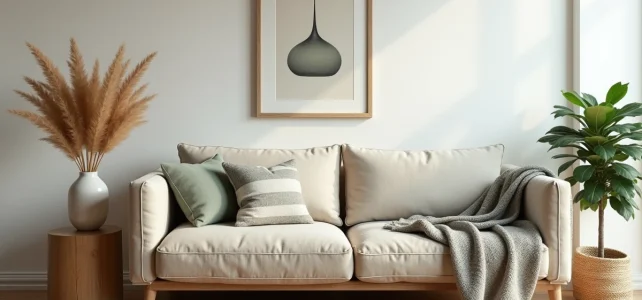
A sofa that seems dull, walls that no longer tell a story, a room that you enter without feeling much. This disconnect between an interior and the person who inhabits it often leads to a search for trendy decoration ideas. The topic is not just about choosing a paint color or a new piece of furniture. It’s about understanding how a few targeted choices can transform the atmosphere of an entire space.
Ceilings and floors as decorative surfaces in their own right
Have you ever noticed that we almost always decorate the walls, but rarely what is above or below? Recent trends are shaking up this habit. Colorful ceilings, moldings, or wallpapered ceilings are becoming as powerful a decorative lever as an accent wall.
Specifically, painting a ceiling in an earthy shade (clay, soft ochre, sage green) visually lowers the room and creates a feeling of coziness. The effect works particularly well in a living room or bedroom with light walls. A colored ceiling changes the ambiance without touching the furniture.
On the flooring side, graphic patterns are making a strong comeback. Cement tiles in a kitchen, herringbone parquet in a hallway, terrazzo in a bathroom: the floor becomes a full-fledged style element. To explore pieces and accessories that accompany this type of choice, a useful resource is: https://cote-deco.fr/.
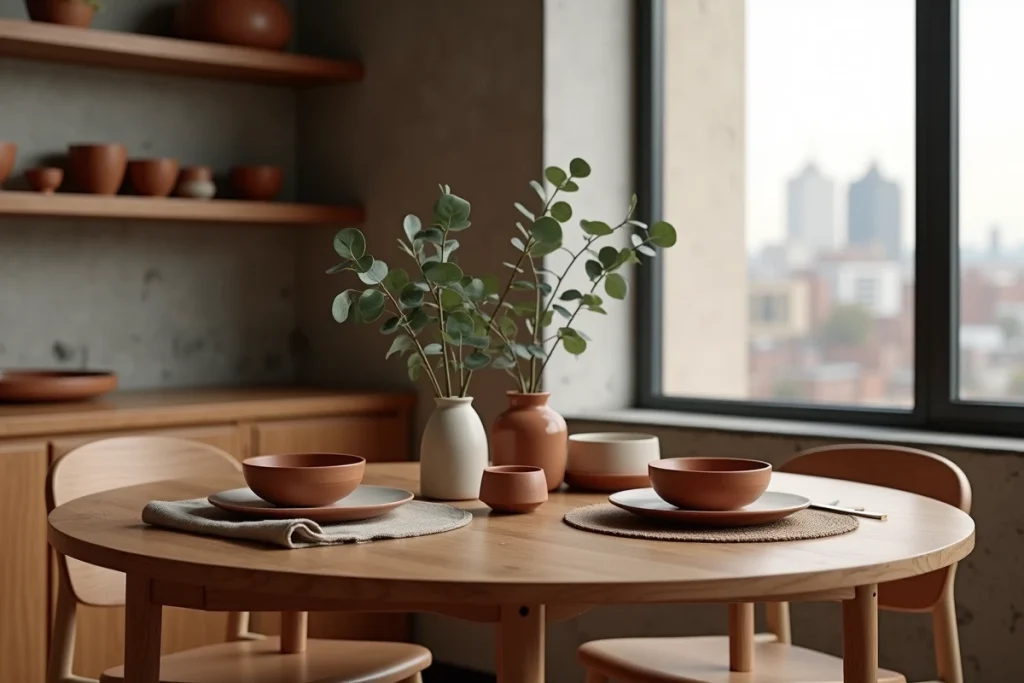
Natural materials and earthy tones: the foundation of a warm interior decoration
Cold minimalism, all in white and stripped-down lines, is clearly receding. Current interior decoration favors warmth, texture, and personality. This translates into a marked return of natural materials and earth-inspired colors.
Wood, stone, and plant fibers
Wood remains the king of materials, but its use is evolving. We are no longer just talking about flooring or shelves. Raw wood is making its way onto headboards, screens, and light fixtures. Natural stone (travertine, veined marble) appears in small touches: coffee table tops, bathroom sinks, console tops.
Plant fibers complete the picture. Rattan on a chair, jute on the floor, linen on cushions. These textures add visual depth without weighing down the room.
Trendy color palette for your interior
Earthy tones dominate: terracotta, caramel brown, warm beige, olive green. They replace the cold grays that have long ruled modern interiors.
The idea is not to paint everything the same color. Combining two similar tones on the walls creates harmony without monotony. For example, a terracotta wall and the others in rosy beige. This approach works in both a living room and a bedroom, and adapts well to both modern and chic country styles.
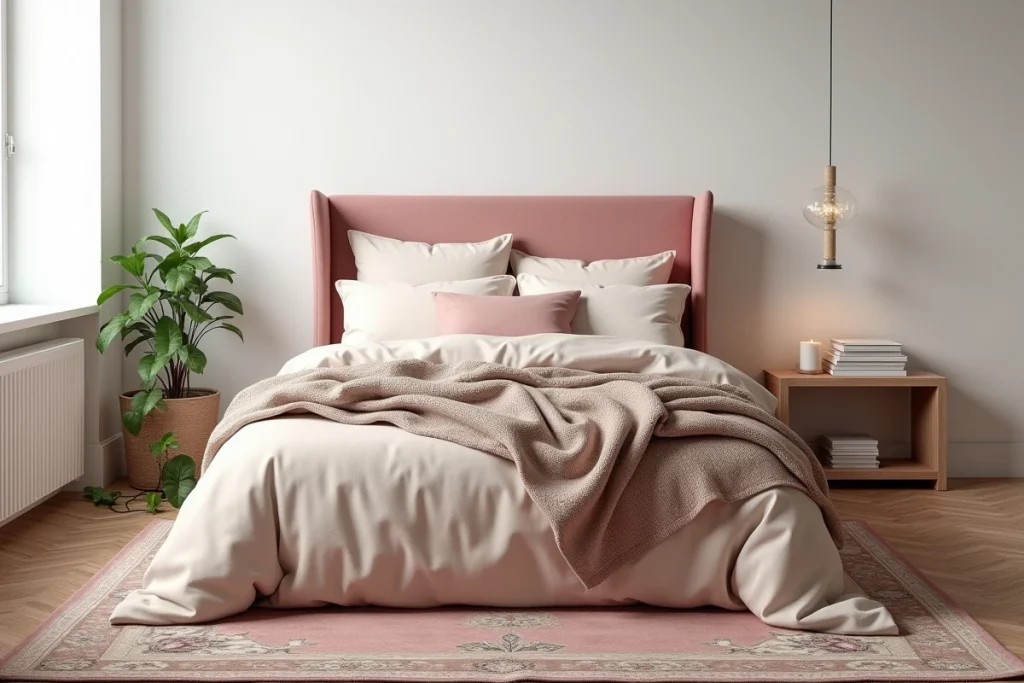
Modular furniture and multifunctional spaces
Remote work has permanently changed the way we use our rooms. A living room sometimes needs to serve as an office. A guest room doubles as a dressing room. This reality pushes us to rethink layouts with adaptable furniture.
- Extendable tables allow you to switch from a compact desk to a dining table for four, without changing furniture.
- Modular sofas can be reconfigured according to use: corner for a movie night, separate seating for entertaining, chaise for reading.
- Removable partitions (wooden screens, thick curtains, open bookshelves) define areas without closing off the space.
A modular piece of furniture replaces two fixed pieces and frees up floor space. In small spaces, this logic radically changes the sense of volume. Before buying, ask yourself: can this piece serve two different purposes?
Biophilic design: integrating nature beyond green plants
Placing a ficus in a corner is not enough to create an interior connected to nature. Biophilic design goes further. It involves integrating natural elements into the very structure of the decoration.
Here are some concrete ideas:
- Stabilized plant walls (moss, ferns) bring greenery without maintenance and improve the acoustics of a room.
- Raw materials left exposed (stone, brick, unvarnished wood) recall outdoor textures.
- Natural light, maximized by light drapes rather than opaque curtains, remains the primary factor for ambiance in a room.
- Colors inspired by landscapes (forest green, slate blue, sand) anchor the space in an organic register.
Biophilic design does not decorate with nature; it structures the space around it. This approach is gaining ground as a sustainable trend, driven by a growing need for calm and sensory connection in urban interiors.
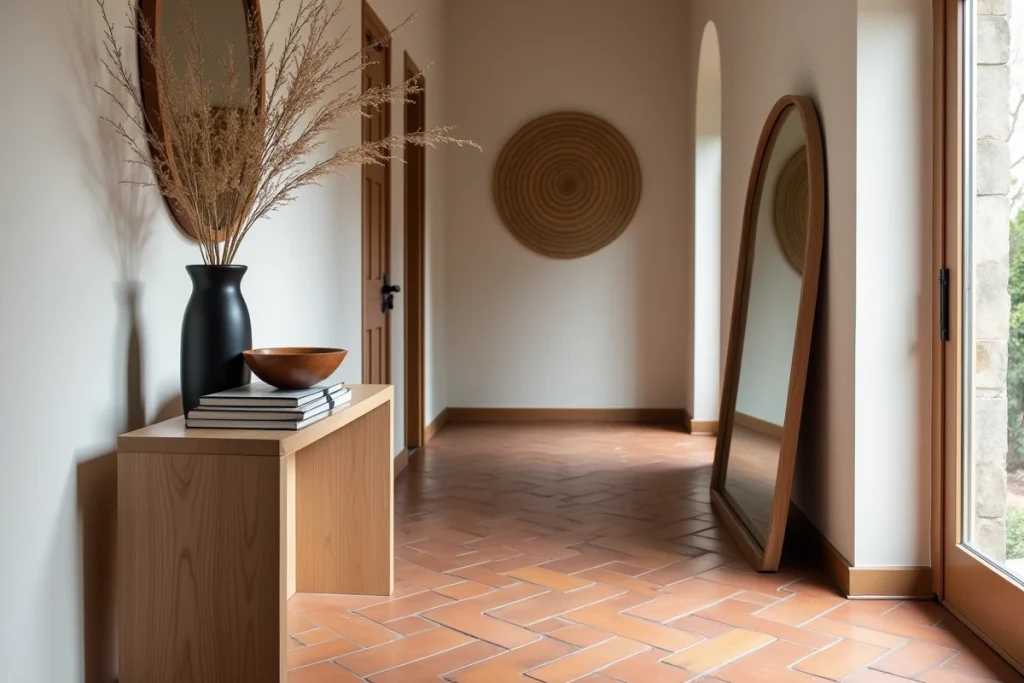
Handcrafted objects and unique pieces for a personal decor
Mass production has its limits in decoration. Two identical living rooms in two different apartments are a sign of an interior that lacks character. Handcrafted objects bring the irregularity and story that industrial furniture cannot offer.
A hand-turned ceramic on a shelf, a vintage mirror with a patinated brass frame, a throw woven by a local artisan: these details tell a story. They do not need to be numerous. Three or four well-chosen pieces are enough to give identity to a living room or bedroom.
This return to unique objects fits into the broader trend of personal and textured interiors. We are moving away from uniform catalogs to create a space that reflects a journey, tastes, and discoveries.
Current trendy decoration relies on concrete choices: daring color where it’s least expected, betting on materials that age well, adapting furniture to real uses, and making room for objects that have a story. A successful interior does not follow a trend; it reflects a lifestyle.