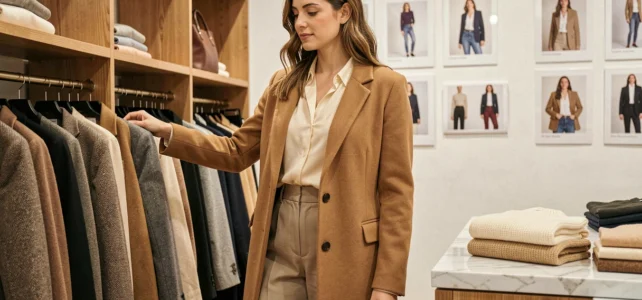
An online-purchased pair of pants arrives at your home, worn twice, and then forgotten at the back of a closet. This scenario repeats itself in most wardrobes. Elevating your style doesn’t come from accumulating pieces, but from making more precise outfit choices that reflect what you actually wear daily. Current fashion trends are moving in this direction, and European regulations are starting to push the textile industry in the same way.
Tax on fast fashion: what French law changes for your purchases
Since the French law of July 8, 2026, and the decree of August 24, 2026, a tax targets ultra-fast fashion. The system adjusts brand contributions based on the breadth of their range and their encouragement of repair.
Specifically, brands that renew their collections at a very rapid pace pay more. For us, as consumers, this means that disposable items will gradually cost more. Therefore, we have every interest in building a style around clothes we keep, rather than chasing every micro-trend.
Those who want to explore current trends without falling into the trap of overconsumption can discover fashion on Blog Too, where inspirations are sorted by style rather than by release week.
Building an outfit around a strong piece rather than a complete look
We often see “ready-to-copy” look suggestions in magazines. The problem is that a complete look works on a mannequin, rarely in real life. The reverse approach is more effective: starting with a single strong piece and building the rest around it.

A structured-cut dress, a blouse with textured fabric, or pants in an unusual color. The strong piece sets the tone, while the rest of the outfit complements it without competing. Accessories play a binding role: discreet earrings if the blouse already draws attention, or on the contrary, bold earrings if the outfit remains understated.
This approach also reduces the time spent in front of the closet. We no longer search for “a look,” we look for what goes with that specific piece.
Colors and fabric: two criteria that change everything
The choice of fabric determines how a garment holds up throughout the day. A fabric that is too thin will wrinkle by noon, while a fabric that is too stiff prevents comfortable movement. For dresses and blouses worn at the office or on the go, a fabric with a minimum of structure and a fluid drape makes the difference between a polished silhouette and a wrinkled look.
In terms of colors, this season’s trends oscillate between saturated shades and neutral tones. Rather than following the exact palette of a runway show, it’s beneficial to identify two or three colors that work with our skin tone and existing wardrobe.
Digital passport for textile products: a concrete aid for better choices
The European regulation on sustainable eco-design (in effect since July 18, 2024) creates the legal framework for the digital passport for products. Textiles and clothing are among the priority groups of the European work plan 2025-2030, with a specific act planned for 2027.
This digital passport will detail the composition, origin, and durability of each garment. The obligations are not yet fully applicable for all textiles, but some brands are already anticipating the system. For us, this means access to reliable information before purchase: exact fabric composition, manufacturing conditions, and precise care instructions.
We will finally be able to compare two dresses or two creations not just on price, but on verifiable data. Feedback varies on this point, as not all brands communicate with the same level of transparency yet.
Accessories and layering: tips that transform an existing wardrobe
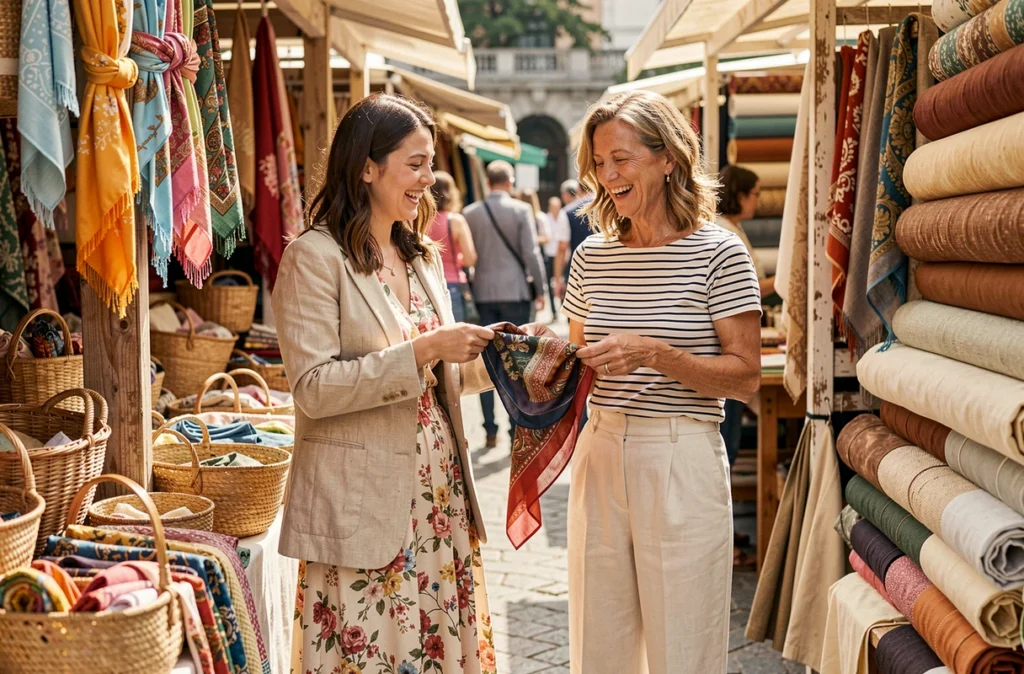
Before buying an additional piece, we can test three techniques that radically change the look of an already owned outfit:
- Layering a dress over straight pants creates an elongated silhouette. The contrast of fabric between the two pieces (a lightweight cotton over raw denim, for example) adds depth to the look.
- A scarf tied as a belt, headband, or simply draped over the shoulders alters the perceived proportions of an outfit. It’s the most versatile accessory in the wardrobe.
- Mismatched earrings (one large, one small) bring a deliberate asymmetry that breaks the overly “coordinated” look of a classic outfit.
These adjustments cost nothing and simply require looking at what we own from a different angle. Elevating your style starts with recombination, not with buying.
Destruction of unsold goods: why second-hand is gaining ground
The European Union is gradually banning the destruction of unsold clothing. Affected companies must publish information about unsold products that are eliminated and the reasons for this elimination. This regulatory framework (European regulation 2024/1781 and delegated regulation 2026/296) pushes brands to sell their stocks differently, directly feeding the second-hand market.
For fashion enthusiasts, this is an opportunity: quality pieces are entering the second-hand market at prices well below their original value. You can find creations from previous seasons, sometimes never worn, with fabrics and finishes that are not available in entry-level ranges.
Your next season’s wardrobe may be prepared with what you already own, complemented by one or two pieces chosen for their fabric, cut, and actual durability rather than for their label.