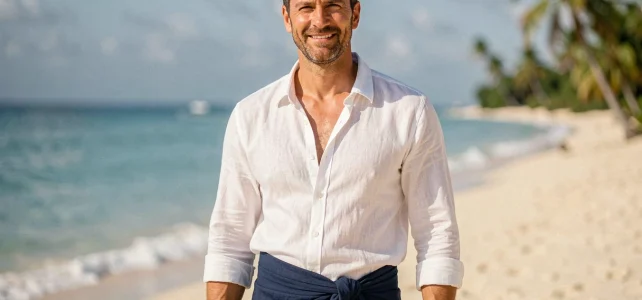
The men’s pareo can be tied in several ways, but not all are equal in terms of hold, comfort, and visual appeal. Between the simple tie at the waist, the crossed drape like a Polynesian sarong, and more elaborate techniques that mimic shorts, the differences in practicality are real. This article compares the main methods for tying a men’s pareo, analyzing what distinguishes a reliable knot from one that slips with the first movement.
Comparison of tying techniques for men’s pareo
Each tying method corresponds to a different use and level of support. The table below summarizes the most common variants according to their complexity, hold, and the context in which they work best.
| Technique | Complexity | Knot Hold | Suitable Context | Recommended Fabric |
|---|---|---|---|---|
| Simple knot at the waist | Low | Medium | Beach, after swimming | Light cotton, viscose |
| Crosser sarong (Polynesian style) | Medium | Good | Beach, seaside bar | Medium cotton, linen |
| Draped shorts (Tu’aro Ma’ohi) | High | Very good | Activity, walking, sports | Dense fabric, thick cotton |
| Rolled long skirt | Low | Low to medium | Relaxation, poolside | Any type |
| Asymmetrical drape (city style) | Medium | Good | Evening, semi-formal look | Linen, noble material |
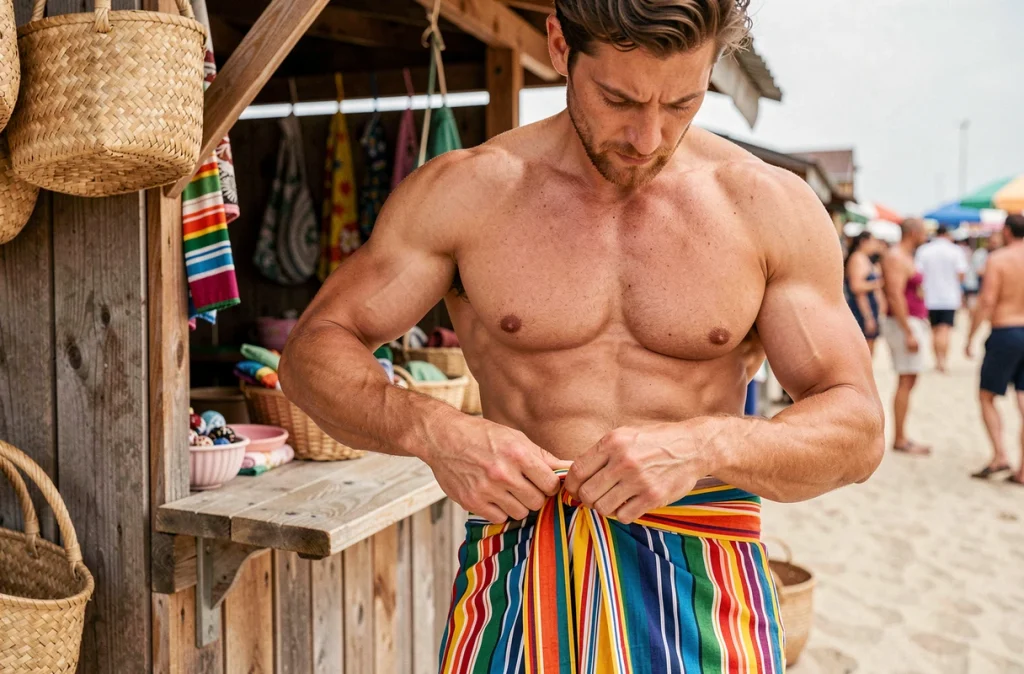
The simple knot remains the quickest method. You wrap the fabric around your waist, fold the two ends, and tie them at the side or front. The problem: on a fabric that is too thin or slippery, the knot comes undone as soon as you move.
The crossed sarong gains stability by passing the fabric between the legs before tying. This is the technique that participants in Tu’aro Ma’ohi use in Polynesia to achieve a comfortable and movement-resistant short. Mastering the basics and knowing how to tie a men’s pareo correctly changes the fabric’s hold throughout the day.
Fabric and weight of the pareo: what keeps the knot secure
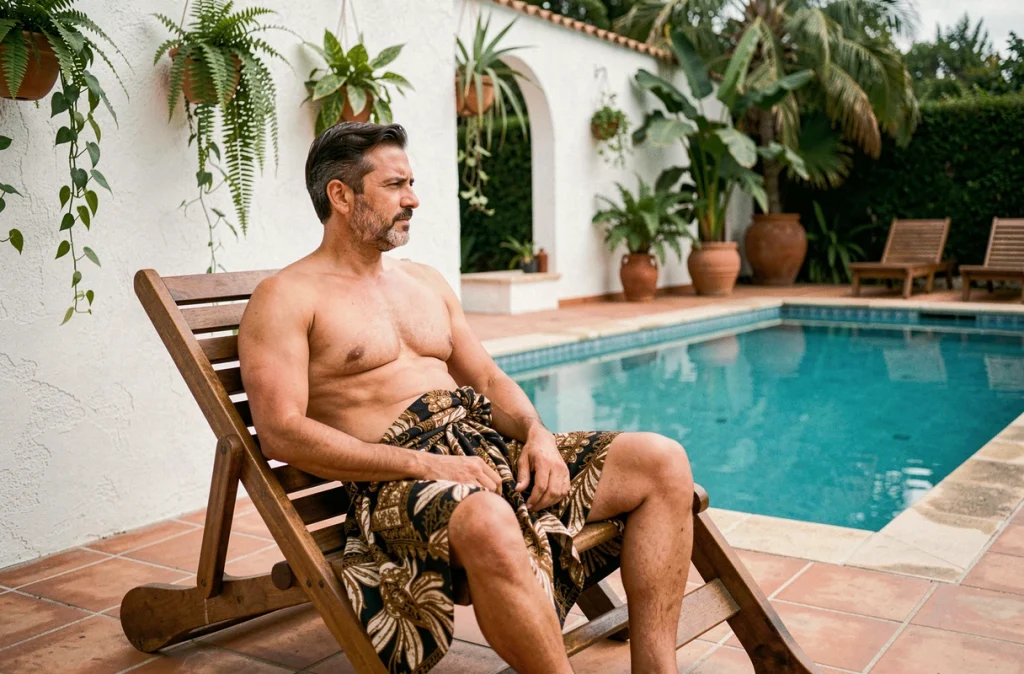
The tying technique is not everything. A pareo made of fine viscose will slip more than a woven cotton or linen pareo, even with the same knot. The choice of fabric determines the reliability of the knot as much as the method itself.
A sufficiently dense weight provides friction between the layers of fabric. It is this friction that prevents the knot from loosening. Very light pareos, often sold as entry-level beach accessories, are designed to be worn for a quick post-swim outing, not to hold for several hours.
Linen and cotton: the materials that grip
Linen has a naturally grainy texture that slows the slipping of the fabric on itself. Medium to thick cotton produces a similar effect. These two materials also absorb sweat, which enhances hold when it’s hot.
- Wrinkled linen creates an irregular drape that locks the folds of the knot in place, reducing the risk of it coming undone
- Tightly woven cotton retains its shape even when wet, making it suitable for transitioning from beach to city without changing technique
- Viscose and polyester slip under tension, requiring regular tightening of the knot or the use of a supplementary belt
If you choose a synthetic fabric for its quick-drying properties, add an extra roll at the waist before tying. This roll thickens the contact area and compensates for the lack of friction.
Men’s pareo in the city: from beach look to semi-formal style
The recent trend goes beyond the beach. Since the Dries Van Noten spring-summer 2026 shows, the men’s sarong has appeared in city looks, worn over pants or alone with a structured shirt. Harper’s Bazaar explicitly recommends keeping the pareo after the beach to create an evening outfit, paired with a blazer or dressy sandals.
This evolution has led to the creation of so-called “tailored” pareos for men, pre-constructed with pockets, integrated belts, or cargo-inspired cuts. The goal is to solve two concrete irritants: the lack of pockets and the fear that the fabric will fall while walking.
Adapting the knot to the urban context
In the city, a visible knot on the side works less well visually than a flat knot tucked under the pareo’s waistband. The asymmetrical drape, with one side longer than the other, produces a look similar to a wrap skirt and can be worn with classic wardrobe pieces.
A often overlooked point: the length of the pareo. For urban use, the fabric should reach the knee or slightly below. Too short, it veers into beach territory. Too long, it hinders walking and distorts the silhouette.
Regulations in seaside towns: why the pareo avoids fines
In France, several municipal decrees prohibit “swimwear” outside of swimming areas. Wearing just a swimsuit in the streets of a coastal town can result in a fine. A properly tied pareo constitutes an acceptable city outfit that avoids this problem while remaining comfortable in hot weather.
This regulatory constraint gives the pareo a practical advantage that a simple swimsuit does not offer. By wearing it between the beach and shops, you stay within the rules without having to put on shorts or pants over a wet swimsuit.
Some guidelines to stay compliant
- The fabric must cover from the hips to the knee at a minimum to not be considered a swimsuit
- Going shirtless remains prohibited in many seaside municipalities: pairing the pareo with a light top completes the outfit
- A pareo worn like a towel over the shoulders, without tying, does not constitute an outfit under the decrees
The men’s pareo gains relevance as men’s dress codes diversify. Its versatility relies on two concrete factors: a dense fabric with a knot suitable for the context, and a length that allows transitioning from beach to street without changing. The rest is a matter of practice: after three or four tries, the gesture becomes automatic.