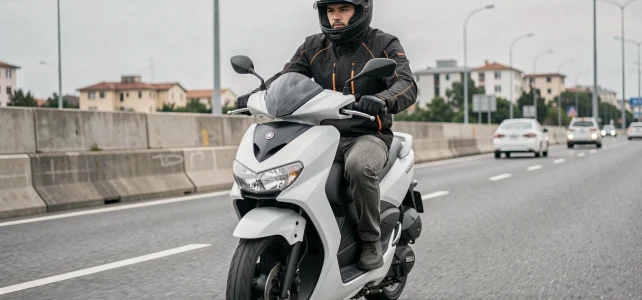
On the highway, a stock XMAX 125 quickly reaches its limit with a passenger and a loaded top case, easily losing about fifteen km/h compared to a solo ride on flat terrain. This discrepancy between the advertised speed and the speed actually usable in daily life is the starting point for all discussions about derestricting. Understanding where the original limit lies, what derestricting actually changes, and what risks it entails allows for an informed decision.
Actual speed of the XMAX 125 in usage conditions
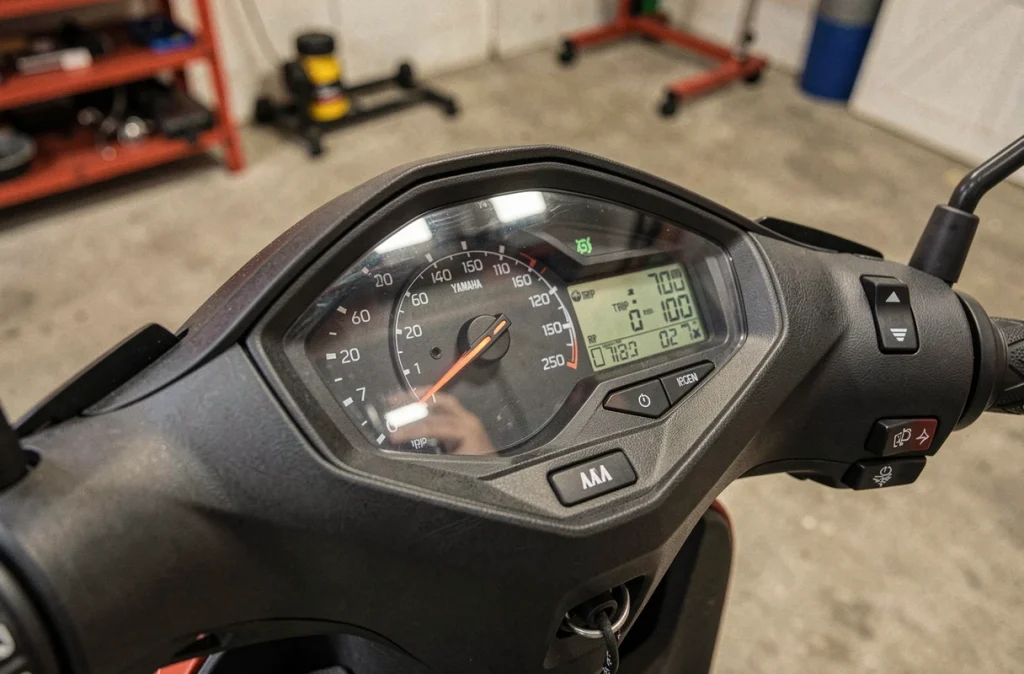
The maximum speed of the XMAX 125 is often discussed as a single figure. In practice, this figure varies depending on load, wind, elevation, and engine condition. A broken-in XMAX 125 maintains a decent pace around 110 km/h on the speedometer when riding solo on flat ground. This is its comfort zone, not its absolute ceiling.
When comparing the maximum speed of the derestricted and stock XMAX 125, it is essential to first account for the difference between the speedometer and GPS. The speedometer consistently overestimates by a few km/h. A reading of 115 km/h often corresponds to a lower GPS speed.
With a passenger and luggage, the usable speed drops by 15 to 20 km/h compared to riding solo. It then falls to around 90 to 100 km/h on the speedometer in good conditions. This reality explains why some owners seek to gain a few km/h through derestricting: the margin for overtaking or merging onto highways becomes very slim.
After break-in: a limited gain
Between leaving the dealership and around 10,000 km, the engine gains flexibility. Feedback shows that the gain in actual speed after break-in remains limited to a few km/h on the GPS. One does not go from a sluggish scooter to a transformed machine. The broken-in XMAX 125 is simply more consistent in its high range, with an engine that better tolerates prolonged full throttle.
The power reserve for overtaking remains low. This is a structural characteristic of the 125 cc single-cylinder engine, not a flaw that break-in or derestricting could completely correct.
Derestricted XMAX 125: what changes mechanically
Derestricting a 125 scooter involves removing the limitations imposed by the manufacturer. On the XMAX 125, the most common modifications involve the variator, the exhaust, or the engine mapping. Some owners replace the stock variator with an aftermarket model (like Yasuni) to alter the acceleration curves.
In practice, a derestricted XMAX 125 can reach speeds significantly higher than the stock model. Reports mention gains that place the top speed well beyond the 110 km/h speedometer range, sometimes reaching 130-150 km/h depending on the modifications made.
What derestricting does not solve
Gaining top speed does not mean gaining safety or enjoyment. The frame, brakes, and suspension of the XMAX 125 are sized for use within the original power range. Pushing the engine beyond its manufacturer parameters subjects these components to stresses for which they were not designed.
- Braking: the stock discs and pads are calibrated for standard operating speeds. At higher speeds, the braking distance increases and the heating of the discs accelerates.
- Transmission: a modified variator puts more strain on the belt. Premature wear of this part can lead to breakage without warning.
- Tires: the factory-mounted tires have a speed rating suitable for the stock model. Regularly exceeding this accelerates their degradation and alters their behavior in curves.
Sanctions and insurance: the concrete risks of derestricting
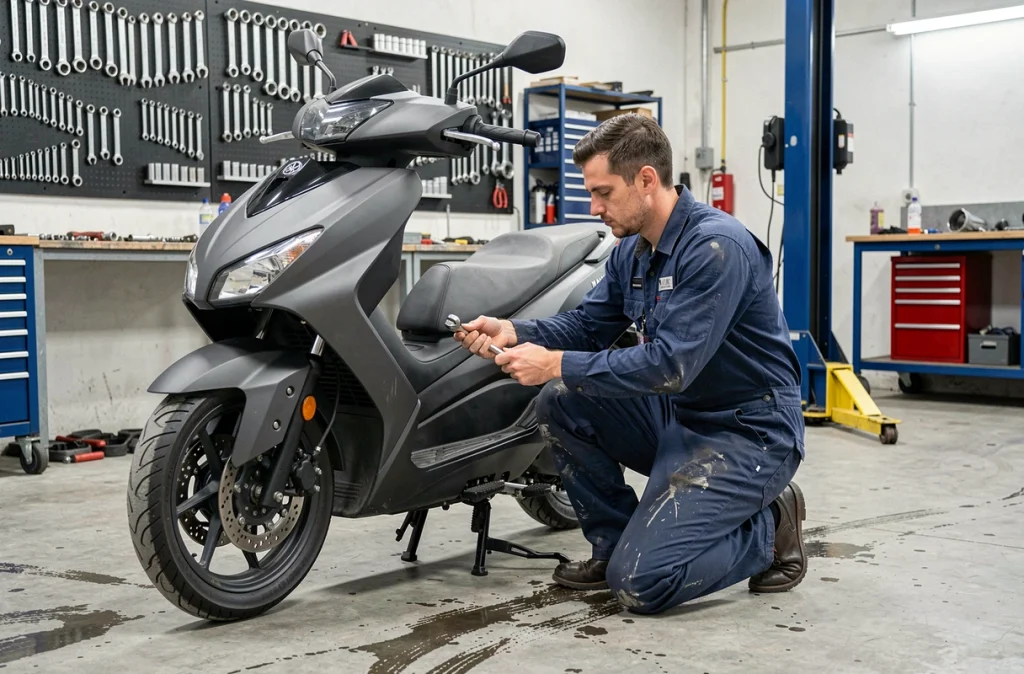
Derestricting a 125 is illegal in France for any vehicle circulating on public roads. This is not a gray area. The consequences affect three distinct areas, and it is their combination that makes the operation risky.
In the event of a roadside check, the non-compliance of the vehicle with its original homologation exposes the owner to a fine and the immobilization of the scooter. Returning to the original configuration then becomes mandatory to recover the vehicle.
The real trap: insurance in case of an accident
An insurer can refuse any compensation if the vehicle has been derestricted. The insurance contract covers a vehicle compliant with its registration document. Any unreported modification that alters the scooter’s performance constitutes a false declaration. In the event of a bodily injury accident, the financial consequences can be severe: the insurer compensates the third-party victim, then seeks reimbursement from the driver for the amounts paid.
This recourse mechanism is documented by specialized two-wheeler insurers. It is not a theoretical risk: compliance verification is part of standard procedures after a serious claim.
Alternatives to derestricting to improve performance
Before modifying the mapping or variator, a few legal interventions can optimize the behavior of the XMAX 125 without stepping outside the homologation framework.
- Thorough maintenance of the transmission (belt, rollers, torque spring): worn rollers or a loose belt can result in a loss of several km/h in top speed.
- Replacement of the air filter and spark plug at recommended intervals: an engine that breathes properly utilizes its nominal power better.
- Choosing suitable tires: a good quality sport-touring tire improves traction and stability at high speeds without altering the mechanics.
- Reducing carried weight: removing an unused top case reduces aerodynamic drag and load, with a measurable effect on acceleration.
A well-maintained XMAX 125 utilizes its entire original power, which is sufficient for urban and suburban use. On highways, the limitation remains structural: it is a 125, and no maintenance trick will transform it into a GT.
The choice between accepting the limits of the 125 or moving to a larger displacement remains the real question. An A2 license opens access to machines that inherently meet the need for margin on the highway, without tinkering or legal risk.