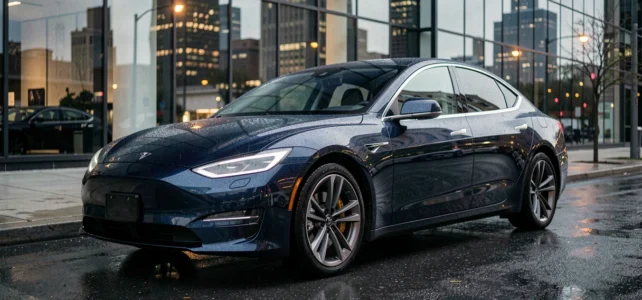
When looking to replace an aging diesel in 2024, the first instinct is to compare the list prices of electric and hybrid models. The reality on the ground is more complex: between European regulatory changes, the rise of Chinese manufacturers, and adjustments in the range at Volkswagen or Renault, the automotive market has shifted on multiple fronts simultaneously. Here are the concrete factors that have influenced purchasing decisions this year.
European CO2 Regulation: A Three-Year Window That Changes the Game for Manufacturers
Until recently, each manufacturer had to prove every year that the average emissions of its new vehicles sold in Europe complied with the ceiling set by Brussels. A deviation, even a temporary one, exposed them to heavy fines.
The European Union changed this logic in 2025 by replacing the annual assessment with a three-year compliance window for the 2025 target. In practical terms, a manufacturer that slightly exceeds the threshold in a given year can compensate in the following two years without immediate penalty.
On the ground, this means that some brands have been able to keep profitable thermal models in their catalog longer than expected. They are simultaneously accelerating the development of electric vehicles to smooth their balance.
The ranges offered at dealerships directly reflect this trade-off: we still find gasoline and mild hybrid engines where a quick shift to all-electric was expected. To follow these developments model by model, you can consult the Bart Magazine auto website, which covers news from manufacturers in France and Europe.

Electric Vehicles in Europe: A Market Accelerating Despite Price Hurdles
Global sales of electric vehicles surpassed the 20 million unit mark in 2025, according to data from the IEA. In Europe, the share of battery electric cars reached about one-fifth of registrations in the first half of 2026, a sign that the momentum is well underway.
In France, the situation is more mixed. New electric and plug-in hybrid vehicles accounted for about a quarter of the market in 2024, a stable figure compared to 2023. The circulation of gasoline, gas, and electric vehicles has increased, while that of diesel cars has declined.
What Is Concretely Blocking Purchases
Price remains the primary obstacle. The most accessible electric models are priced above their thermal equivalents, even after deducting the ecological bonus. Feedback varies on the issue of real-world range in winter conditions or on the highway, where consumption increases significantly.
- The acquisition cost, after the bonus deduction, exceeds that of a comparable thermal model in the city car and compact segments
- The charging infrastructure is improving but remains uneven between urban and rural areas, with fast charging times varying by charging stations
- The resale value of used electric vehicles still lacks clarity, which deters buyers accustomed to calculating total cost of ownership
Chinese Manufacturers in the European Market: Aggressive Pricing and Reactions from Established Brands
The massive arrival of Chinese models in Europe was one of the highlights of 2024. Brands like BYD or MG offer electric vehicles at significantly lower prices than European manufacturers, often with comparable levels of equipment.
Volkswagen responded by accelerating its industrial restructuring, announcing cost reductions and a refocus on the most profitable electric models. Renault has bet on reviving iconic models, such as the electric version of the R4 presented at the 2024 Paris Motor Show.
This competitive pressure has a direct effect at dealerships: discounts on European models have multiplied, and delivery times have shortened in certain segments. For buyers, this is a window of opportunity, provided they check the after-sales network coverage of the new brands.
Digital Vehicle Passport and Traceability: What Is Being Prepared for the Used Market
One aspect that has received little coverage in mainstream news concerns the European regulation on the end-of-life of vehicles. The new European regulation introduces a concept called Digital Circularity Vehicle Passport, set to be implemented from September 2032 for every vehicle placed on the market.
This digital document will centralize information on the materials used, replaced parts, and the recyclability of the vehicle. For the used market, this is a structural change: a buyer will be able to access the complete history of components, which should enhance trust in transactions.
Cybersecurity of Connected Vehicles
Recent vehicles are equipped with dozens of sensors, remote update systems (OTA), and constant connections. The European regulation on cyber resilience now applies to connected components added after sale, even if the vehicle itself is exempt under a different regulatory framework.
- Telematics units, connected dashcams, and third-party accessories must comply with specific cybersecurity standards
- China has simultaneously launched a year-long campaign on the data security of connected vehicles, targeting ADAS systems and embedded artificial intelligence
- Manufacturers must integrate these constraints from the design stage, which impacts development costs and reflects on list prices
The automotive market in 2024 is not just a duel between electric and thermal. The rules of the game are changing regarding CO2 compliance, parts traceability, and cybersecurity, all of which will weigh on prices and available choices in the coming years. Before signing an order form, checking these parameters avoids surprises at the time of resale or maintenance.